18Feb

The U.S. economy surged to a blistering 5.4% GDP growth in Q4 2025—its strongest quarter since 2018—fueled by robust consumer spending and a sharply narrowed trade deficit, even as immigration enforcement and looming tariffs reshape the labor market and future outlook.

As we wrap up 2025, the U.S. and global economies continue to navigate a complex landscape shaped by trade policies, immigration shifts, and geopolitical tensions. In our latest Q4 Economic Report, we dive into the trends defining GDP growth, employment, monetary policy, and the broader global picture. Here's a concise summary of the highlights—perfect for staying informed on how these factors could impact commercial real estate and business decisions.

GDP Growth: A Robust Finish Despite Challenges

The U.S. economy showed remarkable strength in Q4 2025, with the Atlanta Fed's GDPNow model projecting a 5.4% growth rate—the highest since early 2018. This surge was driven by strong consumer spending, a narrowing trade deficit (down 39% to $29.4 billion in October, the lowest since 2009), and positive revisions in personal consumption expenditures (up to 3% in November). Business spending also held steady, with non-defense capital goods orders rising 0.7%.

Productivity jumped 4.9% in Q3, outpacing wage growth and keeping inflation in check. However, analysts note that much of this growth stems from reduced imports rather than pure domestic expansion. Looking ahead, Deloitte warns that tariffs could push core inflation to 3% in 2026, lingering above the Fed's 2% target until 2028 as costs gradually pass to consumers.

Employment: Cooling but Stable Amid Policy Shifts

Hiring slowed significantly in 2025, with only 584,000 jobs added for the year—down from over 2 million annually in prior years. December saw just 50,000 new positions, and revisions lowered October and November figures to 173,000 and 56,000, respectively. The monthly average of 49,000 jobs was the lowest since 2003 (excluding recession years).

Key factors include deportations and immigration enforcement, reducing net immigration from 2.27 million in 2024 to 410,000 in 2025, which reduced the worker supply. This kept the unemployment rate steady at 4.4%. Sectors like health care (713,000 jobs added, averaging 34,000 monthly) and leisure/hospitality (188,000 jobs) led growth, while manufacturing, retail (down 25,000 in December), and warehousing declined.

Fitch Ratings' Olu Sonola cautions that cyclical sectors aren't signaling comfort, and younger workers face higher unemployment due to AI competition and hiring caution tied to tariff uncertainties.

Monetary Policy: A New Era on the Horizon

The Federal Reserve faces a leadership shakeup as President Trump nominates Kevin Warsh to replace Jerome Powell, whose term ends in May. Warsh, a former Fed governor and inflation hawk, is praised for pragmatism but criticized for past attacks on the Fed. Market reactions are mixed; supporters like Canada's Prime Minister Mark Carney call it a "fantastic choice," while others worry about internal tensions.

This comes amid a Supreme Court ruling on presidential removal of Fed governors (e.g., Lisa Cook's case), testing the bank's independence. Warsh's appointment signals potential shifts in asset holdings, policy frameworks, and executive relations—echoing Paul Volcker's inflation-fighting era.

Global Economy: Resilient but Cautious Growth

The IMF projects global growth at 3.3% for 2026 and 3.2% for 2027, slightly up from 2025 estimates, thanks to easing trade tensions. U.S. growth accelerated to 4.3% in Q3, boosted by tech investments, while China slowed to 2.4% due to weak housing but strong exports. Europe varied: France grew 2.2% on aerospace, Germany stagnated, and Japan contracted 2.3%.

Trade volume is expected to dip to 2.6% in 2026 before rebounding, with policy uncertainty lower but still elevated. Oil prices may fall 7% due to oversupply, and bilateral deals add complexity. Overall, the world economy remains adaptable, with tech-driven exports providing a buffer.In summary, Q4 2025 paints a picture of U.S. resilience amid policy headwinds, with global stability hinging on trade resolutions. For commercial real estate stakeholders, these trends underscore opportunities in health care and tech sectors, while cautioning on inflation and labor shortages.

If you'd like a full copy of the Q4 2025 Economic Report, feel free to contact me directly at Lee & Associates.

Ron Mgrublian, Lee & Associates Commercial Real Estate Services

08Apr

±1,800 to ±6,600 SF of Office space at 979 Village Oaks Drive in Covina is on the market for lease

Available : ±1,800 – ±6,600 

Lot Size: ±40,847 SF of Land

Rate: $1.65 gross

Term: 3-5 years

Zoning: C-P (PCD)

APN: 8447-031-038

Park-like setting: The building is situated in aserene environment with beautiful views of the park.

Ample parking: Large lot with ±28 Parking Spaces

Next to 10 Freeway with close access to 57, 71, 210 & 60 Freeways

12Mar

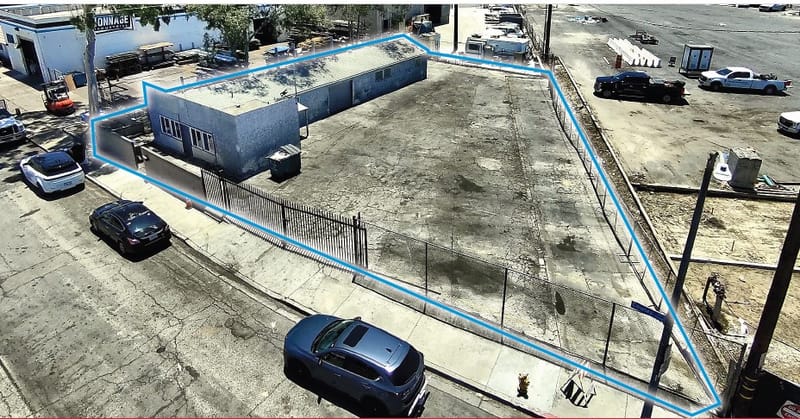
New Listing For Lease: ±25,660 SF of Fenced Yard with Mobile Office at 1465 E. Grand Ave, Pomona, CA.

AVAILABLE: ±25,660 SF of Land

ZONING: I2

TERM: 3-5 Years

• Block Wall

• Paved Yard

• Power and Water Available

• Office Trailer

• Close to 60, 71 and 10 Freeways

07Mar

The ±31,634 SF site (±0.73 Acres) in Pomona, CA is leased!

ZONING: M1

TERM: Two (2) Years

Truck Parking and Outdoor Storage Possible

Lease Rate $0.25 gross

Light Industrial Uses

Fenced and Partially Paved Yard

Close to 10, 71, & 60 Freeways

20Jul

A Simple Example of How Leasing Commissions Are Paid to a Listing Commercial Real Estate Broker for Renting Your Property.

In regard to Leasing Commissions often get asked by landlords, “how do I pay you for leasing my commercial real estate property?”  The short answer is a percentage of the rent consideration”.  If you’re not sure what that means, I’ll give one simplistic example to explain.

Say I rent your property for 5 years for $10,000 a month.  To determine the rent consideration, you multiply the total number of months by the amount due per month.  In this case it would be 60 months (5 years x 12 months) times $10,000 rent a month which would give us a rent consideration of $600,000.  You then take the rent consideration and multiply by the previously agreed to rate in the listing agreement.  We’ll use 6% for simplicity’s sake in this example which would give you a total commission of $36,000.00 ($600,000.00 rent consideration x a 6% fee).

Typically, then the $36,000 would then be split by the broker representing tenant and the broker representing the landlord or $18,000 to each broker.  The fee is an important sales tool as a low fee can discourage tenant brokers from presenting and encouraging your property as an option for their clients.

A good broker should also list your property on all the major listing services here in Southern California including, AIR, CoStar and LoopNet Premium.  Additionally, marketing efforts should include mailers, cold calling, canvassing, email blasts, broker meetings, company website listing, intercompany communication systems blast, social media, the web, signs and 3D (Matterport) Virtual Tours.

Ron Mgrublian is a commercial real estate broker specializing in Industrial and Warehouse Properties with the Lee & Associates Los Angeles – Long Beach Southern California office.